Handmade in Calgary by pet parents, for pet parents. Named after our cats, Coffee & Cookie. 🐾

When Your Cat Dies at Home: A Quiet Guide to the Days That Follow
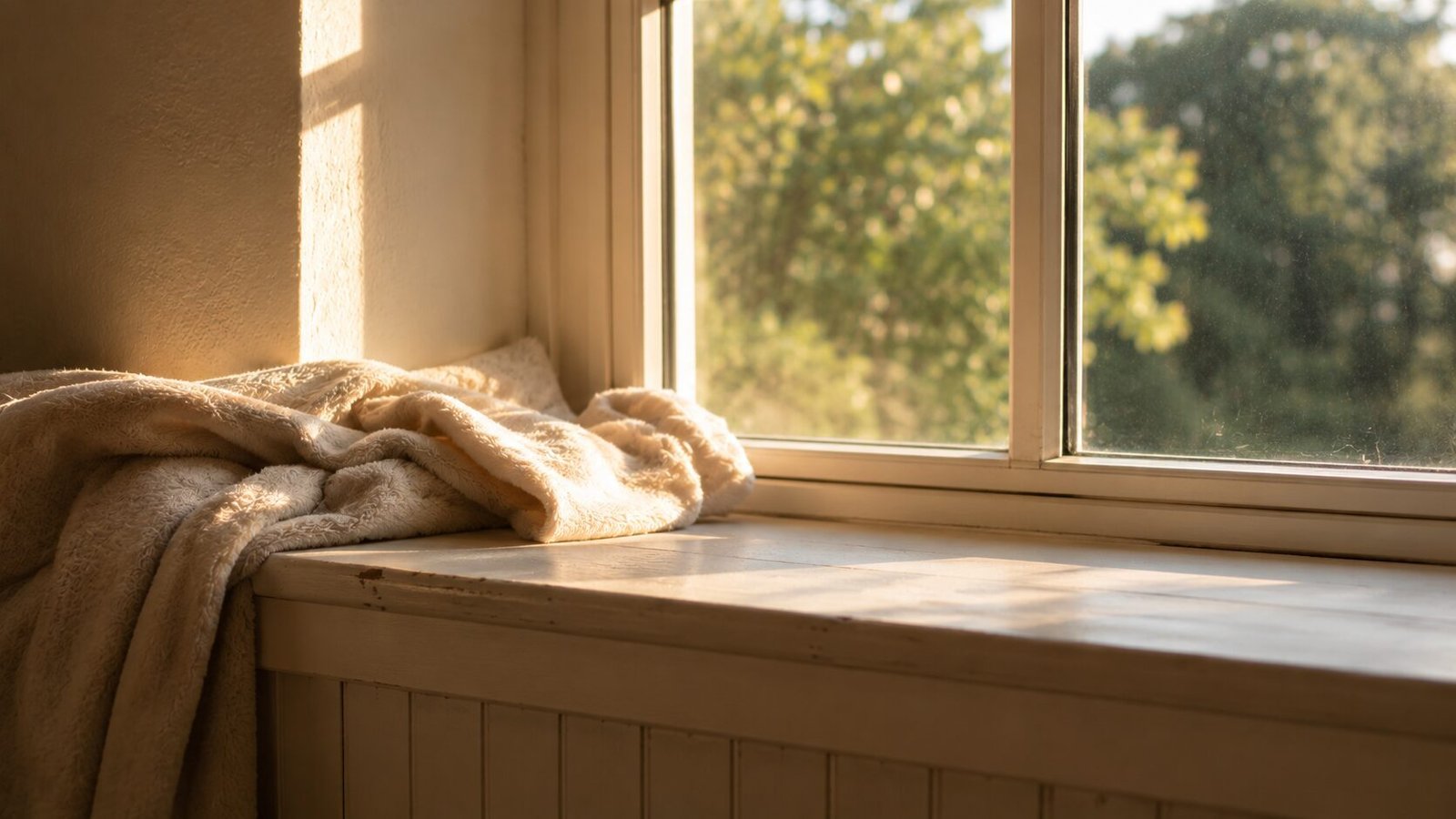
If your cat dies at home, the hours that follow have a quality unlike anything else — and this post is written for exactly that moment.
The strange thing about losing a cat is how quiet the house goes.
Not silent — the house still makes all its ordinary sounds, the furnace cycling on, the neighbour’s car, the creak of the floor in the hallway. But there is something underneath those sounds that is different now, a quality of the air that is hard to name. A cat fills a home in ways you don’t notice until they are gone. The weight of them on the sofa. The specific warmth of a lap that has been chosen. The small sounds — a landing, a settle, a slow breath in the dark — that were so woven into the texture of your days that you stopped hearing them years ago.
You notice them now. In their absence, you hear every one.
If you are in these early hours or days after losing your cat, this post is not a checklist. It is not a guide to what to do next. There is a companion piece for the practical things — the aftercare decisions, the cremation services here in Calgary — and you can find it when you are ready for that. This post is just company. A place to sit for a few minutes with someone who understands that what you are going through is its own particular kind of grief, and that it deserves to be treated as such.
The Home After
When a cat dies at home, you come back to the same house — and that is the thing nobody warns you about.
The food bowl is still on the floor. The water dish still has water in it. The litter box hasn’t been touched, and you are not sure when you’ll be able to touch it, and that’s all right. Their blanket — or the corner of the sofa they claimed, or the patch of carpet where they liked to stretch in the afternoon sun — still holds the faint impression of them.

These things will wait. There is no timeline for any of it. Nothing needs to be washed or packed away or returned to normal by any particular day. If seeing the bowl every time you walk into the kitchen is too much right now, you can move it. You can cover it with a tea towel. You can drape a blanket over the corner of the sofa they loved until you feel ready to sit in that spot again. None of that is avoidance. All of it is just kindness to yourself, which is the only appropriate response to the first days after a loss.
Some people find that leaving things exactly as they were brings comfort — a sense of continued presence, of the shape of a life still visible in a room. Others find they need to clear things away to breathe. Most people find themselves somewhere between the two, moving through the house carefully, making small decisions one at a time, on days when they feel able to.
All of this is correct. There is no wrong way to be in a home that is learning to be different.
The Body Remembers
Something nobody talks about, and something that catches almost everyone: your body still knows they were here.
You will close doors carefully for a while — quietly, the way you learned to, because they were always on the other side of doors at inconvenient moments. You will check before you sit down. You will pause at the top of the stairs and listen, not for anything specific, just out of a habit so ingrained it doesn’t even require thought anymore. You will glance toward their spot when you hear a sound that resembles them. You will reach toward the sofa cushion before you remember.
This is not a sign that something is wrong with you. This is not your mind playing tricks. This is the evidence of how completely a cat lives inside a life. The habits of care form over years, quietly and without ceremony, and they do not dissolve in a day. They are, in their own way, a record of love — all the small adjustments you made, without thinking, because someone small and particular needed you to.
Let the habits be there for a while. They will soften on their own, in their own time. For now, closing the door carefully is just one more way of honouring that they were real, and that they mattered, and that you lived together.
The Days That Follow
Sleeping is allowed. Sleeping more than usual, sleeping at odd hours, sleeping because the grief is physically exhausting and your body knows this even when your mind doesn’t — all of this is allowed.
Not eating much is allowed. Eating the same three things because they require no decisions is allowed. Making tea because it gives your hands something to do is allowed.

Telling people you’re fine when you’re not is allowed too, especially on the days when you simply do not have the energy to explain. You don’t owe anyone a full account of how you are doing. You are getting through the days, and that is enough.
Grief in a house that still smells like your cat is its own particular kind of exhausted. The scent fades before you are ready for it to. You may notice the moment it does. Many people do. It is another small goodbye inside the larger one, and it is allowed to be hard.
There is no productivity expected of you right now. There is no appropriate pace. There is only this week, and then the next one, and the slow incremental work of learning how to live in a home that has changed.
If You Need More Than Quiet
Sometimes the quiet becomes too much to sit in alone.
If you are finding that the grief is larger than you can carry by yourself — if it is affecting your sleep in ways that aren’t getting better, or your ability to get through the days, or your sense of yourself — there is support available here in Calgary from people who take pet loss seriously. Our companion post on Pet Loss Support Calgary: A Guide to Grief Resources in Alberta has a full guide to local counsellors, grief practitioners, and community resources who understand that this kind of loss is real and worthy of care.
You don’t have to be in crisis to reach out. You just have to be a person who is hurting. That is reason enough.
A Note From Us
We built Coffee & Cookie Design around two senior cats — Coffee and Cookie — and around the particular ache of loving an animal who is getting older. We know what it is to look at them on an ordinary afternoon and feel the quiet dread underneath the love. We know the silence you are sitting in right now.
The practical side of things — the aftercare decisions, the cremation options here in Calgary — are all covered in our companion guide, when you are ready for that. There is no rush.
And when you are ready — not now, not necessarily soon, but whenever that time comes — some people find comfort in having something handmade to hold. Something with their name on it. Something made slowly, for them specifically.
We will be here.
— Michelle, Evan, Coffee & Cookie
Coffee & Cookie Design · Calgary, Alberta · coffeencookiedesign.com