Handmade in Calgary by pet parents, for pet parents. Named after our cats, Coffee & Cookie. 🐾

Navigating the One Year Pet Loss Anniversary: Coping with Triggers and Finding Peace
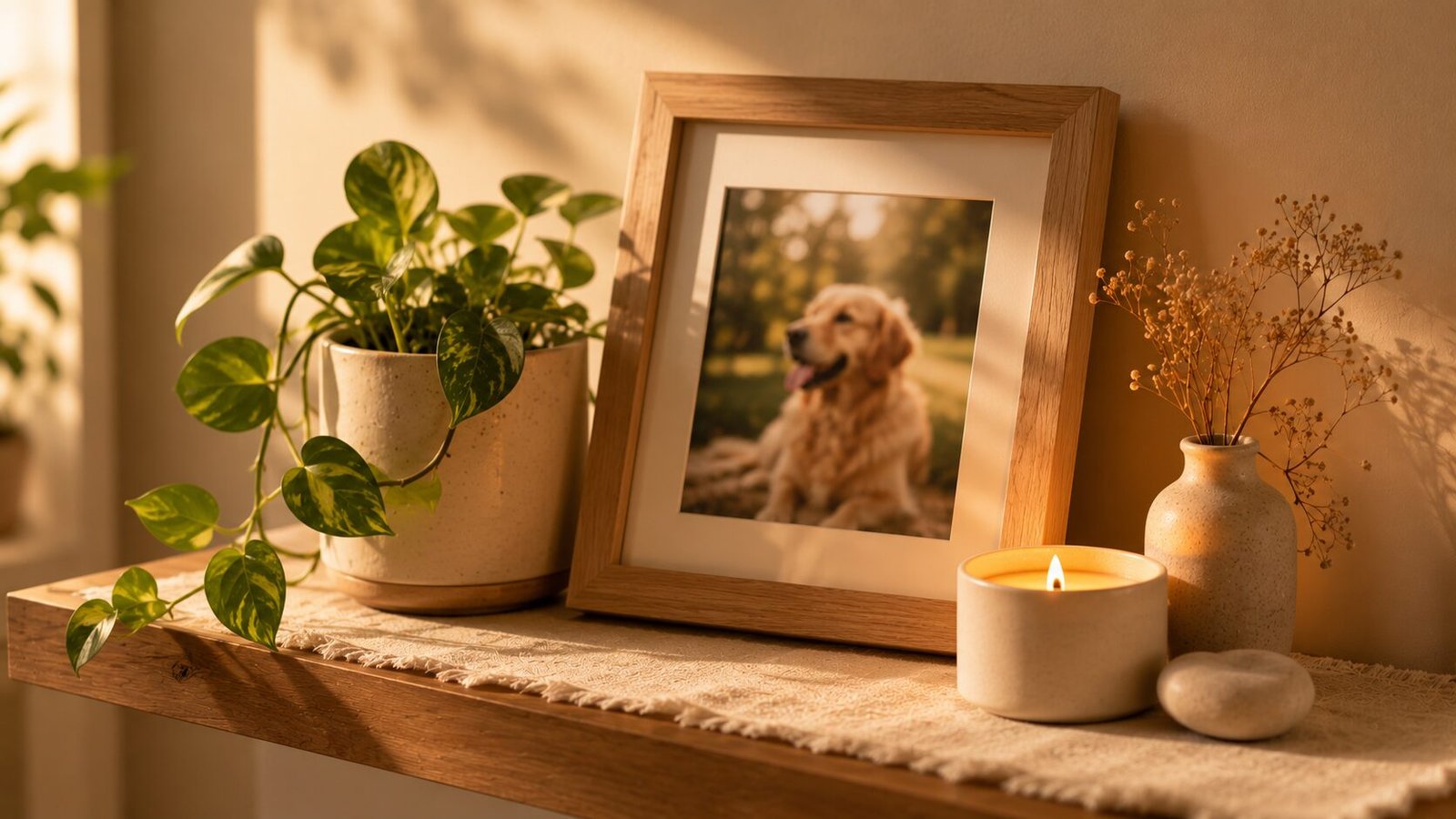
You thought you were doing better.
And then the date appeared on the calendar — or your phone reminded you with a photo from a year ago, a video of them doing something ordinary — and the grief came back with a force that surprised you. Not because you had forgotten. But because your body hadn’t.
If you are approaching the one year pet loss anniversary, or if you’re in the middle of it right now, this post is for you. What you are experiencing is not regression. It is not a sign that something is wrong with how you’ve been healing. It is, in fact, the nervous system doing exactly what it was built to do — and understanding that makes it a little easier to move through.
Why the Anniversary Hits So Hard: The Psychology
The one year pet loss anniversary is one of the most common contexts for what grief researchers call anniversary reaction — a predictable intensification of grief that occurs around meaningful dates: the date of death, a birthday, a holiday that was shared. It is well-documented across every category of loss, and it is especially pronounced at the one-year mark.
Here is why:
The nervous system holds time in a way the conscious mind doesn’t fully track. As the anniversary approaches, your body begins to register environmental cues — the quality of light at this time of year, seasonal smells, the rhythm of the days — that are associated, at a somatic level, with the period of loss. This is not metaphor. It is neuroscience. The body is a calendar, and it keeps its own records.
For many people, the weeks before the anniversary are harder than the day itself. Anticipatory anxiety — the dread of how the day will feel — can create a low hum of distress that begins days or even weeks out. And for those who felt they were “doing better,” the resurgence of raw grief can feel like a reversal, when in fact it is simply a visit. The grief is not returning. It never fully left. It is simply asking, again, to be acknowledged. For those who chose euthanasia for their pet, the anniversary may carry an extra layer — not only the loss, but the memory of the decision that ended the suffering. Both are held in the same date.
Knowing this won’t stop the wave. But it can help you meet it without fear — which changes the experience significantly. You can read more about the early stages of loss here.
Managing Digital Triggers
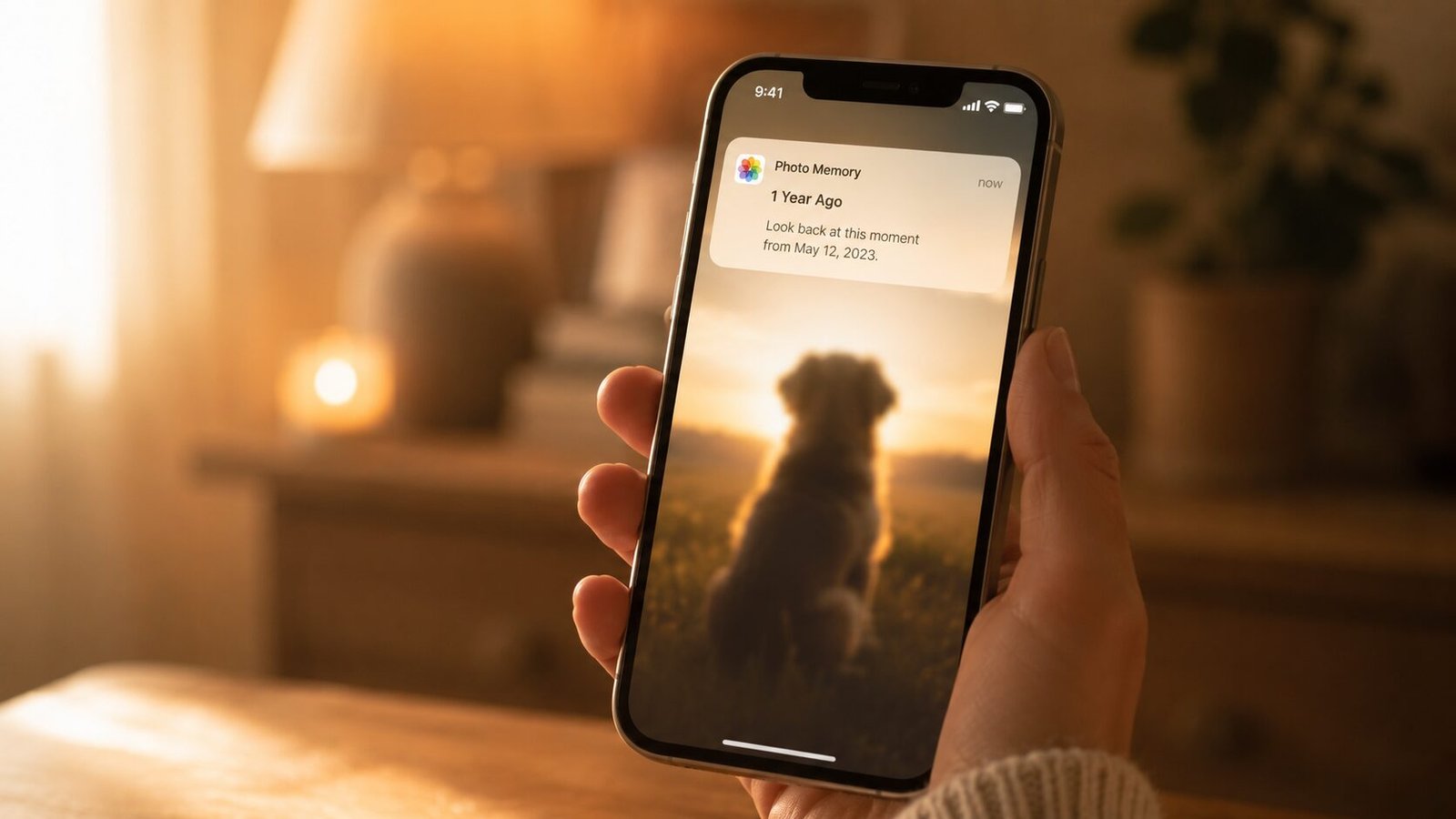
Our devices have become unintentional grief ambushes. Google Photos, Apple Memories, Facebook’s “On This Day” — all designed to surface the past with cheerful notifications that have no way of knowing what that past contained.
Here is how to take back some control:
Apple Photos / Google Photos: Both platforms allow you to disable “Memories” and “On This Day” notifications in settings. On iPhone: Settings → Photos → toggle off “Show Memories & Featured Photos.” On Android/Google Photos: Library → Utilities → Memories → tap the three dots → turn off Memories. You can re-enable them when you feel ready.
Facebook Memories: Go to Settings & Privacy → Settings → Memories → choose to hide all memories, specific dates, or specific people (or in this case, specific years). You can mute the anniversary period entirely.

Your camera roll: Consider creating a dedicated album for photos of your pet and archiving it from the main camera roll, so their images don’t surface unexpectedly during an idle scroll. They’re not gone — they’re held somewhere intentional.
You are allowed to manage your own environment. Turning off a notification is not a betrayal. It is self-care.
Planning the Day: Two Approaches
There is no single right way to spend the anniversary. Some people need solitude; others need company. Some years call for quiet; others call for movement. Here are two frameworks — choose, combine, or adapt.
The Quiet Honoring Day
For those who need stillness, privacy, and inward reflection.
1. Write them a letter. Sit down with paper and pen — not a keyboard — and write to your pet. Tell them what the year has been like. What you’ve carried. What you’re grateful for. What you still miss on an ordinary Tuesday. Address it to them directly. You don’t need to share it or do anything with it afterward. The act of writing is the ceremony.

2. Build or tend your memorial space. If you have a memorial shelf or corner at home, spend time with it today. Light the candle. Rearrange the objects. Add something new — a pressed flower, a photo you haven’t printed yet, a small stone from a walk you took this year. Let the tending itself be the ritual.
3. Safe space contemplation. Find a quiet spot — a chair they loved, a corner of the garden, a patch of afternoon sun — and simply sit. No phone, no task, no agenda. Bring a warm drink if it helps. Give yourself twenty minutes of unstructured presence with the memory. Let whatever comes, come.
The Shared Celebration Day
For those who need company, movement, and outward expression.

1. Walk the path that was theirs. If your pet had a favourite walk, trail, or outdoor space — take it with one person who loved them too, or who will simply walk beside you without needing you to explain. The physical movement through a familiar landscape is its own kind of memorial.
2. Donate in their name. Make a contribution to a local animal rescue or shelter in your pet’s honour. In Calgary: the Calgary Humane Society, AARCS (Alberta Animal Rescue Crew Society), or the Meow Foundation all do meaningful work for animals still waiting to be loved. In making a gift in your pet’s name, you extend their legacy outward — from private grief into the larger world of animals and the people who care for them.
3. Share a memory out loud. Call someone who knew your pet. Not to talk about loss — to talk about them. The funny thing they did. The habit that was inexplicable. The way they greeted people at the door or ignored them with tremendous dignity. Telling the stories keeps the relationship alive in a way that silence cannot.
The Day After: Preparing for the Grief Hangover
This is the part no one warns you about.
The day after the anniversary — or sometimes the day after a significant honoring ritual, a funeral, a memorial service — is often harder than the day itself. Grief researchers and counsellors call it the grief hangover: the emotional and physical depletion that follows a period of intense feeling.
You may wake feeling flat, wrung out, or strangely empty. You may feel relief that the day has passed, followed immediately by guilt about feeling relieved. You may simply feel very tired in a way that sleep hasn’t fixed.
This is normal. Plan for it.

The day after the anniversary is not the day for obligations, productivity expectations, or social commitments you can avoid. It is a day for gentleness. Eat something warm. Move your body slowly — a short walk, some stretching, nothing demanding. Avoid the temptation to push through or “get back to normal” before you’re ready. Give yourself until the end of the week to feel like yourself again, and treat that as the plan rather than a deviation from it.
If you have a therapist or counsellor, consider scheduling a session in the days following the anniversary, not just before it. The after is where the support is most needed and least anticipated.
You Made It a Year
That is not a small thing.
A year of mornings without them. A year of learning which corners of the house feel different now. A year of figuring out, slowly and imperfectly, how to carry something you didn’t choose to carry.
You did that. And the love that makes this anniversary hard is the same love that made the years before it so full.
If you are looking for a way to mark this day with something lasting — a shadow box completed, a coaster engraved with their name and years, a piece made in the quiet knowledge that they deserved to be remembered properly — we are here. Our messages are always open.
— Michelle, Evan, Coffee & Cookie
Coffee & Cookie Design · Calgary, Alberta · coffeencookiedesign.com
Made to remember. Crafted with love.