Handmade in Calgary by pet parents, for pet parents. Named after our cats, Coffee & Cookie. 🐾

What to Say When a Pet Dies: 15 Messages and the Art of Condolence

You found out your friend lost their pet, and now you’re staring at your phone trying to figure out what to say.
You want to say the right thing. You’re also aware, in the way kindness makes us aware, that there is a wrong thing — and you’d rather say nothing than accidentally make it worse. So the message sits unsent, the card stays unbought, and the silence stretches on. Pet loss is what grief counsellors call disenfranchised grief — a loss that doesn’t always receive the same social support or recognition as other kinds of grief. Which is exactly why the gesture of reaching out matters as much as it does.
Here is what we want you to know first: the fact that you’re thinking this carefully already means you’re doing it right. Your friend doesn’t need perfect words. They need to know you see them. This guide will help you find a way to say that — in a text, a card, a small gesture — without the fear of getting it wrong.
What Not to Say: The Phrases That Backfire
Most unhelpful responses to what to say when a pet dies come from good intentions poorly aimed. Here are the ones most likely to land badly, and why.

“You can always get another one.”
This tells your friend their pet was replaceable. They weren’t. A new pet is a new relationship — not a substitute for the one they lost.
“At least they lived a long life.”
Length of life doesn’t reduce depth of grief. A fifteen-year relationship ending is not easier because it lasted fifteen years — in many ways, it’s harder.
“I know how you feel — I lost my [pet/person] too.”
Grief is not a competition, but it is personal. Pivoting to your own loss, even with empathy, shifts the focus away from them at the moment they most need to be seen.
“They’re in a better place.”
This may comfort you. It may not comfort them. Let them bring spiritual or philosophical framing to the conversation if they choose to.
“It was just a cat / dog / rabbit.”
This one doesn’t need explanation. Never say this. Not even softened. Not even prefaced with “I know you might think this is silly, but…”
Silence — because you didn’t know what to say.
For a grieving person, the absence of acknowledgment from people they expected to reach out can feel like confirmation that their loss doesn’t matter. An imperfect message, sent with love, will always be better than nothing.
15 Messages You Can Use Right Now
These are written to be copied, adapted, or sent as-is. Take what fits.
Short Text Messages (for when you need something immediate)
- “I just heard about [name]. I’m so sorry. They were so loved, and so are you.”
- “No words feel like enough, but I wanted you to know I’m thinking of you and [name] today.”
- “I’m here. No need to respond — just wanted you to know you’re not alone in this.”
- “[Name] was such a big part of your life. I’m so sorry you’re going through this.”
- “Sending you so much love today. Take all the time you need.”
For the Loss of a Dog
Dogs occupy a particular space in daily life — walks, routines, greetings at the door. Acknowledge the specific shape of that absence.
- “[Name] was the best kind of constant — always there, always glad to see you, always making the ordinary feel a little warmer. I’m so sorry he’s gone.”
- “Dogs have a way of becoming the rhythm of a home. The walks, the routines, the way they made you feel like you were always being waited for. Losing that rhythm is a real loss. I’m thinking of you.”
- “[Name] was loyal in the way only dogs can be — completely, without condition, every single day. That kind of love leaves a real mark. I’m so sorry.”
For the Loss of a Cat
Cats offer a quieter companionship — presence without demand, trust without performance. That specific quality of relationship deserves specific acknowledgment.
- “Cats choose you in a way that feels particular and earned. The fact that [name] chose to be near you, to trust you with her quiet — that was real love. I’m so sorry she’s gone.”
- “There’s something about cat companionship that’s hard to explain to people who haven’t experienced it. The quiet presence, the way they find the sunny spot and somehow make the room feel complete. I know how much [name] meant to you.”
- “[Name] sounds like he was exactly the right cat for exactly the right person. I’m so glad you had each other, and I’m so sorry for your loss.”
For Someone Who Chose Euthanasia
This decision deserves its own category, because the grief it carries is layered — love, loss, and the particular weight of having made the call. Your message should acknowledge the courage it took, not just the loss.
- “What you did for [name] was one of the most loving things a person can do. Choosing peace for them over more time for yourself — that’s not something everyone can do. I hope you know that.”
- “The decision you made was made out of love, even though it cost you so much. Please don’t carry any guilt about it. You put [name] first, right to the very end.”
- “There are no right words for what you’re going through. But I want you to know that I think you were the best possible person for [name] to have had — especially at the end. I’m so sorry.”
- “Loving someone well sometimes means letting them go gently. That’s what you did. I’m thinking of you so much right now.”
Why a Handwritten Card Still Wins
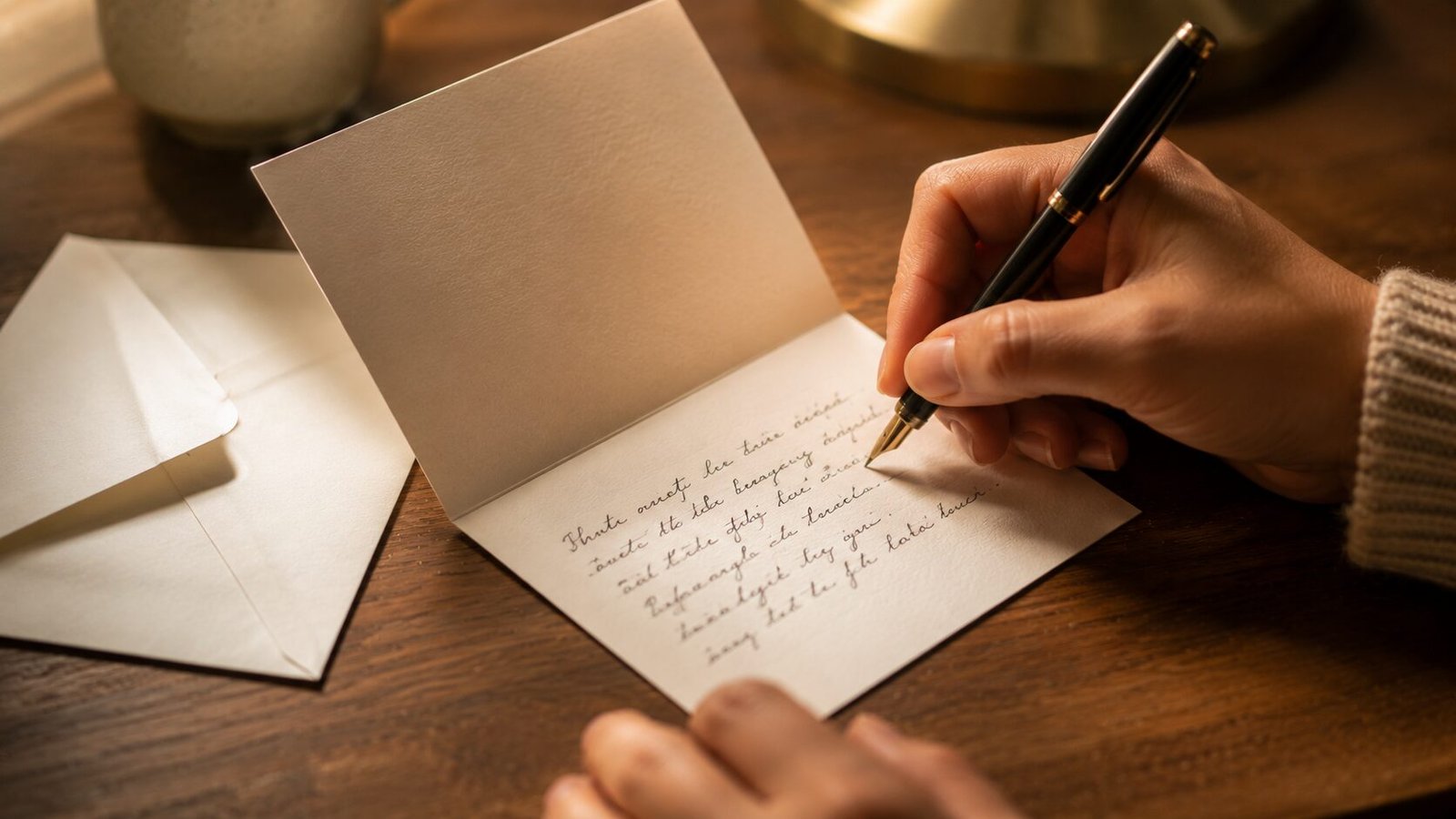
A text message is kind. An email is thoughtful. But a handwritten card is something a grieving person will keep.
There is something about handwriting — the physical evidence of someone sitting down, choosing words, pressing pen to paper — that communicates care in a way that digital text cannot replicate. A card doesn’t require a response. It doesn’t appear in a notification. It arrives, it is held, and it is often kept for years.
You don’t need to write much. “I loved [name] too. I’m thinking of you.” — six words in your own hand — will mean more than a paragraphs of carefully curated text copied from the internet.
If you’re not local and can’t deliver a card in person: buy one, write it simply, and post it. The gesture of it landing physically in someone’s letterbox carries weight that a DM cannot. If you’re looking to pair the card with a small ritual — a candle, a memorial coaster, something that turns an ordinary morning into a quiet moment of remembrance — our guide to pet memorial rituals has ideas.
Low-Pressure Gifts That Land Well
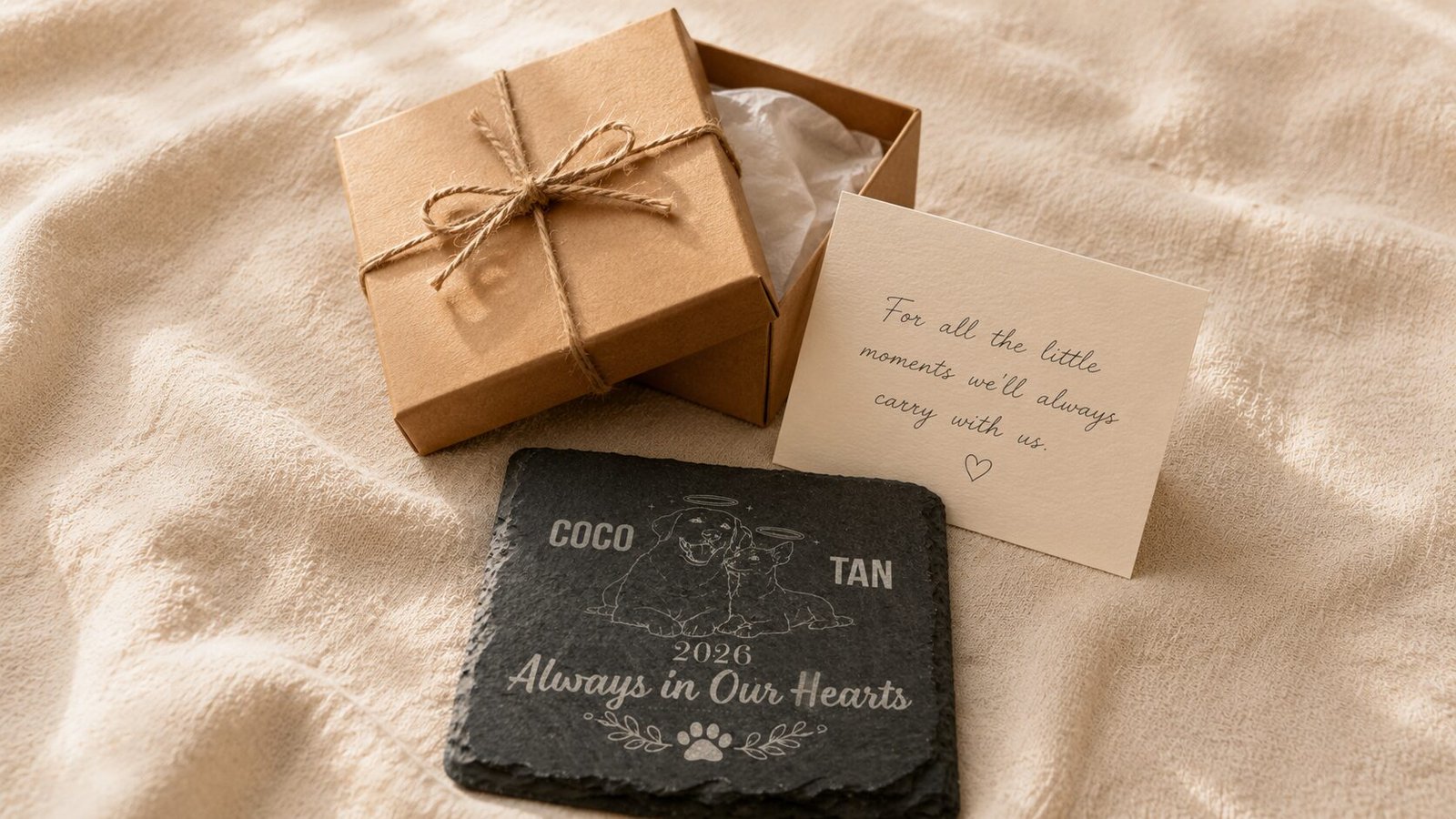
In the immediate aftermath of a loss, grand gestures can feel like pressure. What works better is something small, specific, and useful — something that says I thought about you without requiring a thank-you or a reaction.
A handwritten card plus a small local gift. A candle. A nice tea. Something that says sit down and take a moment.
Something engraved with the pet’s name. A personalized coaster, a small keychain, a luggage tag — anything that carries the name of the animal and says: I know who you lost. I know they had a name. At Coffee & Cookie Design, our engraved slate coasters and memorial keychains are exactly this kind of gift: small, specific, and lasting without being overwhelming. They’re the kind of thing a person uses every day and thinks of quietly, without it requiring them to perform grief.
An offer that is specific and doesn’t require a response. Not “let me know if you need anything” — which puts the burden on them. Instead: “I’m dropping food at your door Thursday. You don’t need to answer.” Or: “I’ve ordered something small for you. It’ll arrive this week. You don’t have to do anything.”
For a fuller guide to low-pressure gifts that work well for grieving pet owners — from a simple card to something handmade and lasting — our pet sympathy gift guide has more options.
You don’t need to fix it. You can’t fix it. What you can do is show up — with words, with a card, with something small and named and chosen with care — and say: I see what you’ve lost. It mattered. You matter.
That is enough. That is, in fact, everything.
— Michelle, Evan, Coffee & Cookie
Coffee & Cookie Design · Calgary, Alberta · coffeencookiedesign.com
Made to remember. Crafted with love.
[…] much worse than you’d expect — we’ve written a full companion guide for exactly that: What to Say When a Pet Dies: 15 Messages and the Art of Condolence. It covers the phrases that help, the ones that backfire, and fifteen copy-pasteable messages you […]