Handmade in Calgary by pet parents, for pet parents. Named after our cats, Coffee & Cookie. 🐾
Inside the Studio: The Handmade Pet Memorial Process, Start to Finish
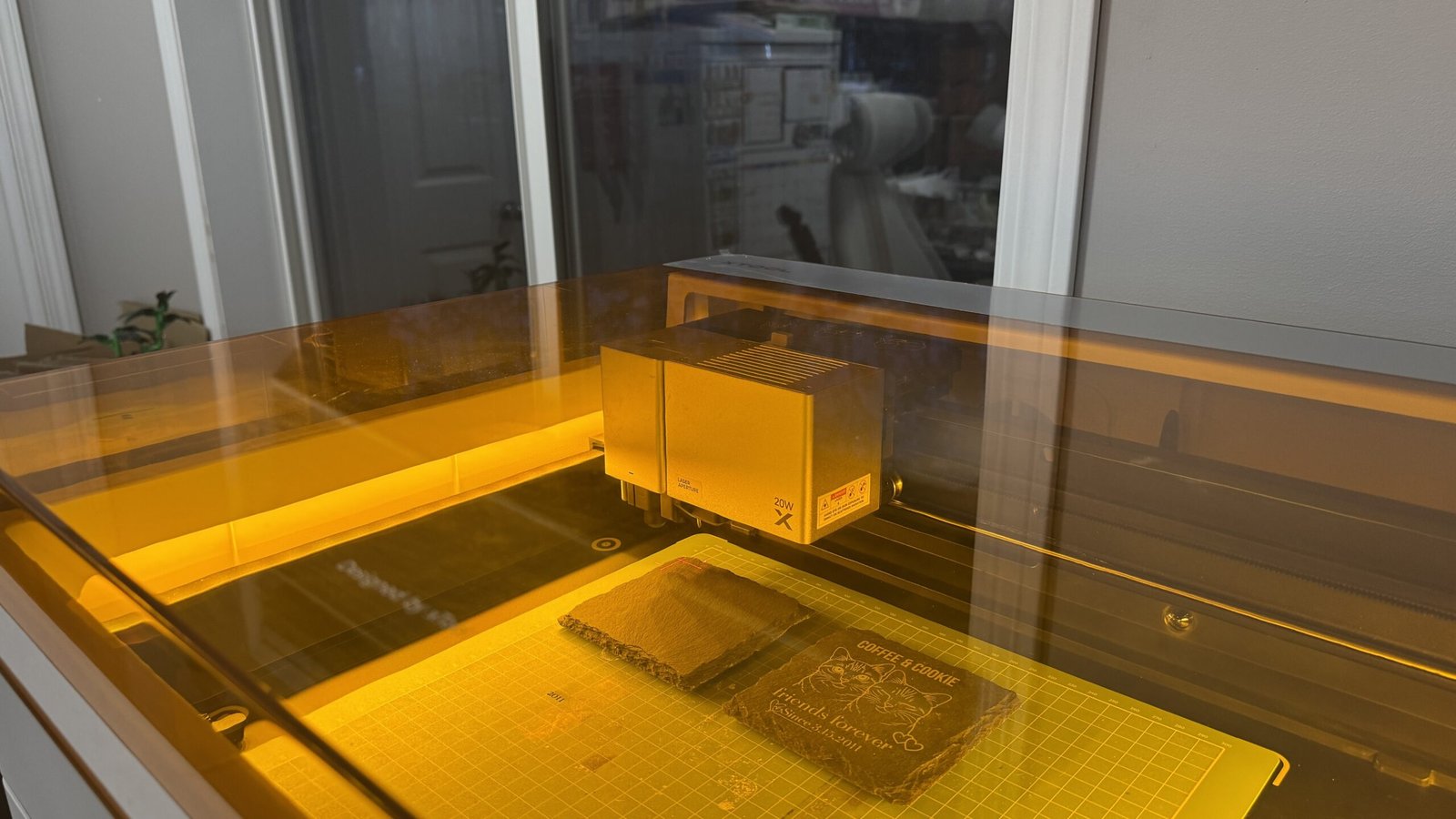
This is a post about the handmade pet memorial process — what actually happens between the moment you send a photo and the moment something permanent arrives at your door.
The message usually arrives with a name.
Sometimes it arrives with more — a date, a photo, a few words about who they were and how they moved through a room. Sometimes it arrives with less: just a name, and the quiet understanding that the rest of the story doesn’t need to be said because I already know the shape of it. Someone loved an animal. The animal is gone. They want something made that says: you were here, and you mattered, and I am not going to let that become just a memory that fades.
I read every message twice before I respond. Not because I’m slow — because the name of someone’s pet deserves a moment before it becomes a file on my workbench. It deserves to be held, briefly, as what it is: the name of a specific, irreplaceable living creature that someone loved for years. The weight of that doesn’t diminish with repetition. I hope it never does.
If you’re curious about how laser engraving compares to printed keepsakes — why the technique matters and why we chose it — that’s covered in our companion post. This post is about what actually happens in the studio, from that first message to the moment the finished piece comes off the machine. Come in.
The Design Stage: Before Anything Is Cut
The first thing I do with a pet’s photo is look at it.
Not process it, not import it, not begin converting it. Just look. What does the light do in this image? Where is the detail that makes this animal recognisable as themselves — the particular set of the ears, the texture of the coat, the expression that the person who loved them would know anywhere? A good photo tells me all of this. A difficult photo — taken in low light, or at an angle that obscures the face — requires more time and more patience, and both are available.

The design process for a layered shadow box begins with the portrait, but it doesn’t end there. Each of the five layers has a function: the name and dates in the first layers, the portrait layer at the second, the home and nature layer at the third, the Rainbow Bridge layer at the fourth, and the day and night background at the deepest point. Each layer is designed individually and then assembled as a whole, and the decisions made at this stage — the size of the lettering, the placement of the portrait within the frame, how much breathing room exists between the name and the edge of the panel — are the decisions that determine whether the finished piece feels balanced and right, or slightly off in a way that is hard to name but impossible to ignore.
I spend more time at this stage than any other. It is the stage that costs the most in invisible effort and the one that shows least in the finished piece — which is exactly as it should be. Good design disappears into the result.
The Material: What Basswood Is and Why It Matters
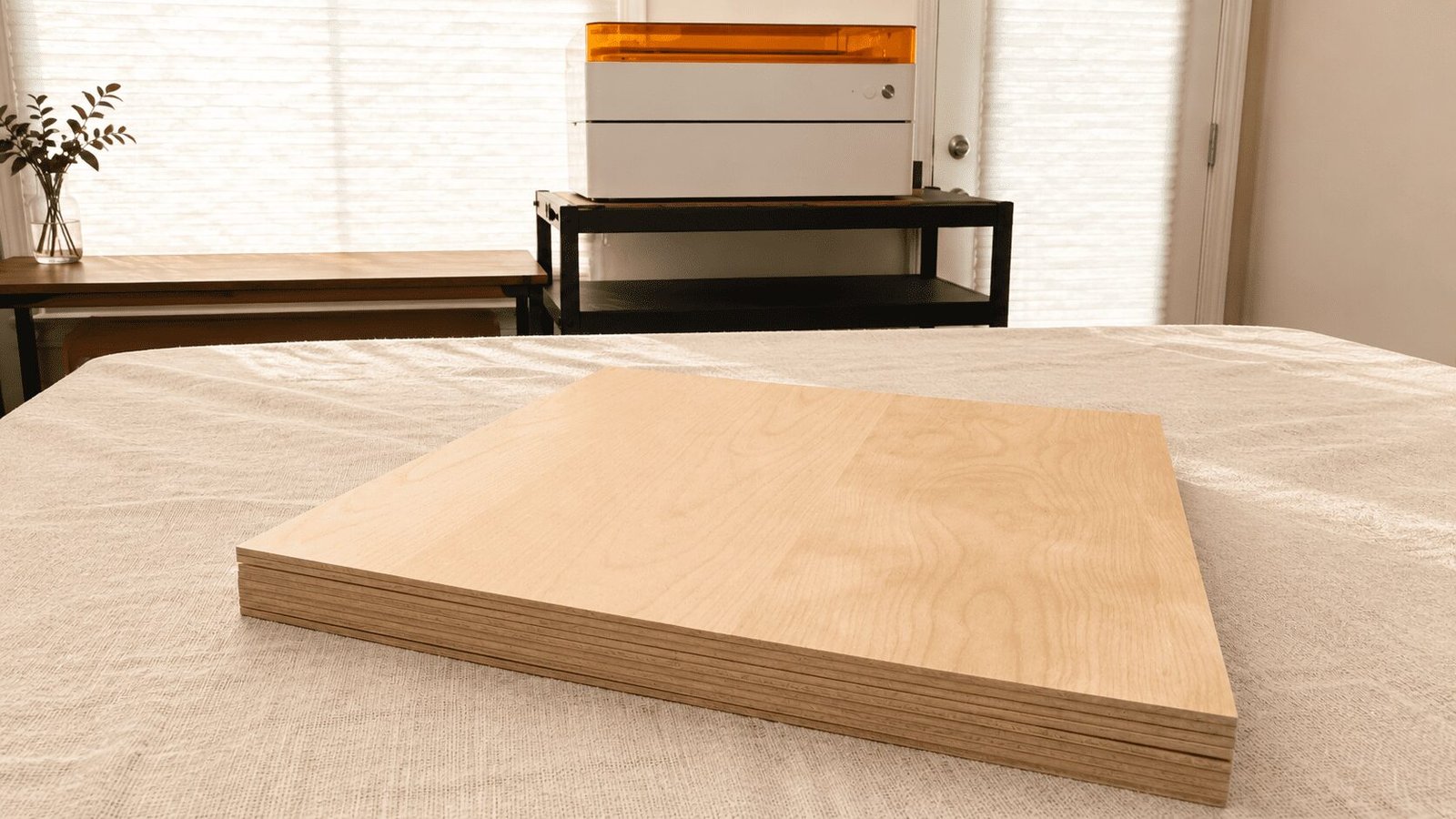
Before the laser touches it, basswood is almost impossibly smooth.
It is a pale, fine-grained hardwood — cream-coloured in the flat, with a grain so tight and even that it barely reads as grain at all until the light hits it at an angle. Pick up a fresh sheet and it has a slight give to it, a warmth that denser hardwoods don’t have. It is light. It smells clean. It is the kind of material that makes you want to run a hand across it before you do anything at all.
We chose basswood because of how it takes a laser. The grain is fine enough to hold portrait detail at a precision that coarser wood cannot — individual hairs in a cat’s coat, the subtle shading that makes an eye look like an eye rather than a dark circle. When the laser burns basswood, it darkens to a warm amber-brown, a colour that works with the natural tone of the wood rather than against it. The contrast is high enough to be clear from across a room and warm enough to feel like art rather than a printout.
It is also a sustainable material, which matters to us. We are making things meant to outlast the people who order them. The material should be worth that.
The Moment the Engraver Runs
The studio is small and the engraver is loud in it.
Not painfully loud — it has a specific quality of sound, a focused mechanical hum with a high-frequency edge, like something thinking very hard. When it is running on a portrait, the sound changes slightly as it moves across different tonal values — faster through pale areas, slower and heavier through the darks — and if you know what you’re listening for, you can almost hear the image appearing.
There is a faint scorch. Basswood burning smells sweet rather than acrid, a warm woody note that settles into the studio and stays there. I have stopped noticing it except when it changes — when the laser slows on a dense patch of detail and the smell deepens slightly, telling me something is being worked at carefully.

The first time I watch a name appear, it still surprises me. The letters materialise out of the pale wood as though they were always there, waiting to be found rather than placed. The laser doesn’t draw on the surface — it reveals. The name has depth. It has shadow within the letterforms where the beam has gone deepest. Run a fingertip across it and you feel the recess, the physical fact of the engraving, which is not ink or pigment or anything applied from outside — it is the wood itself, changed.
I stand beside the machine while it runs on portrait pieces. Not because I need to supervise — it has been calibrated and it knows its job — but because it feels wrong to leave. Something is being made that matters. I want to be present for it.
Finishing and Checking: The Part That Takes Longer Than It Should
When the engraver stops, I wait.
The wood is warm from the machine and needs a moment. Then I lift the panel and hold it under the lamp, angled to catch the light across the surface of the engraving. This is how you see it properly — raking light across the relief of the lettering and the portrait, the shadows in the recesses making the image legible in a way that flat-on lighting doesn’t show.
I am looking for consistency: are the fine lines in the portrait as clean at the edge as they are at the centre? Is the lettering level? Does the portrait look like the animal in the photo, or has something been lost in translation that I need to address? Most pieces pass this inspection on the first run. Some require a second pass on a specific detail — a line that didn’t take deeply enough, a tonal value that reads too light. When that happens, I fix it. The time it takes is not a factor in whether I fix it.
After inspection, the panels are cleaned. Basswood engraving leaves a fine residue in the recesses — a dusty char that lifts easily with a soft brush, revealing the full contrast of the burn against the pale wood beneath. This is the moment the portrait fully appears. It is also, reliably, the moment I know whether I’ve got it right — and there is a specific, quiet satisfaction when I have. Not pride exactly. More like relief, and gratitude, and the sense of having been trusted with something and having been equal to it.
The layers are then assembled, checked for alignment, and prepared for packaging. Every piece is wrapped carefully, the glass cleaned a final time, the corners protected. The handwritten card is the last thing added before the box is sealed.
What This Process Is For
Every piece that leaves this studio is going to become someone’s forever.
I mean that specifically, not figuratively. It is going to sit on a shelf in every home that person ever lives in after this. It is going to be the thing they look at on the hard days and the thing they show to people who ask about the name on the wall. It may outlast them. It may be kept by someone who never met the animal but recognises, from the care of the object, that they were loved completely.
That is what I am making. Not a product. Not a keepsake in the generic sense. The handmade pet memorial process exists because some things should not be manufactured at scale. A permanent record of a specific love, made from wood and light and the particular name of one irreplaceable animal.
The process takes the time it takes because the result has to be right. There is no version of this work where close enough will do.
— Michelle, Evan, Coffee & Cookie
Coffee & Cookie Design · Calgary, Alberta · coffeencookiedesign.com
Made to remember. Crafted with love.