Handmade in Calgary by pet parents, for pet parents. Named after our cats, Coffee & Cookie. 🐾

Grieving a Senior Pet: When You Knew It Was Coming and It Still Hits Like a Wave
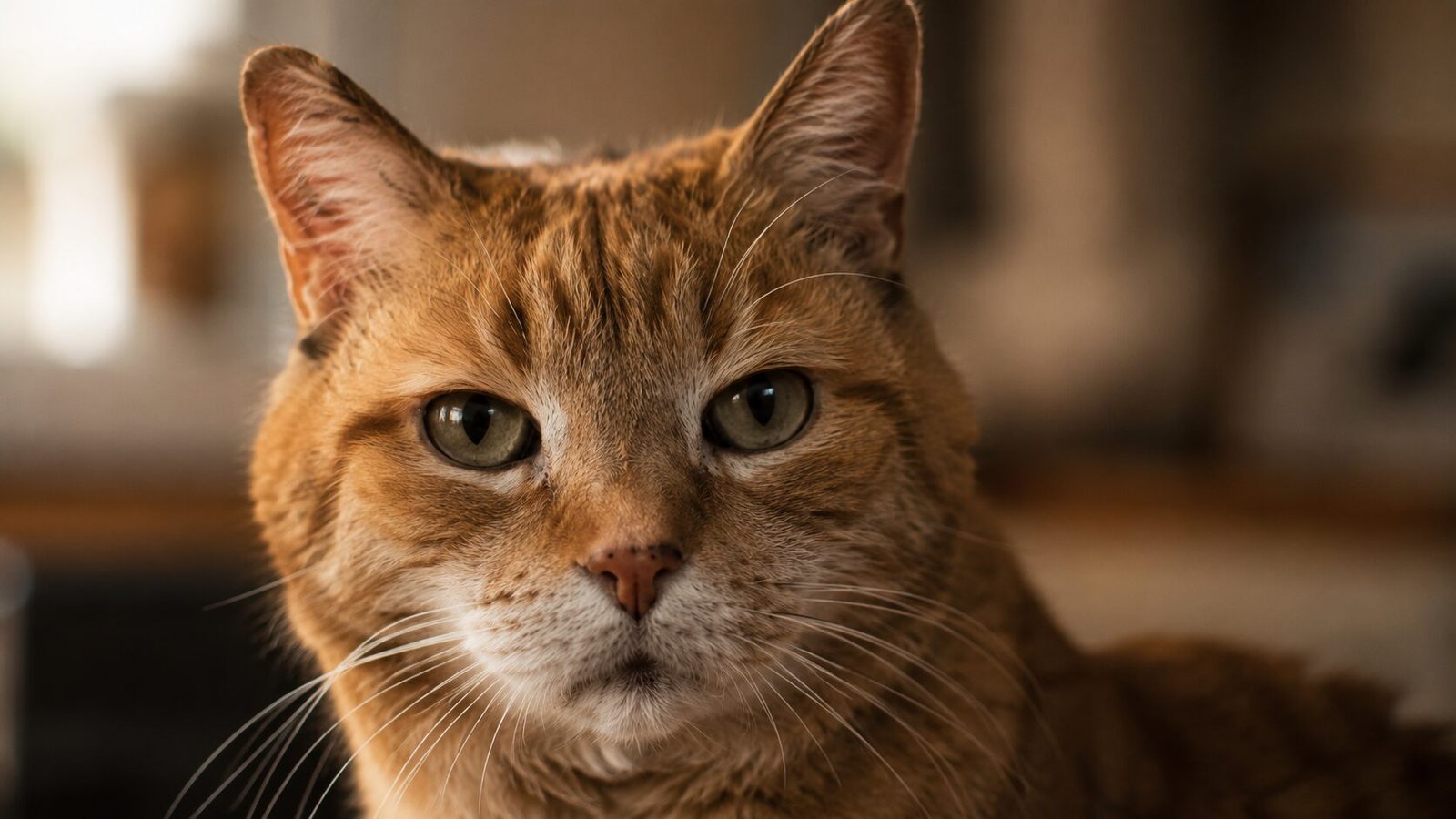
If you are grieving a senior pet — or bracing for what is coming — this post was written from inside that exact experience.
There is a particular kind of love that comes with a senior pet.
It is still love — fully, completely, in all the ways it always was. But something else moves in alongside it, quietly, over time. A low hum underneath the ordinary days. You notice it in small moments: the extra-long hug before you leave in the morning, the way you have started memorising things — the exact weight of them in your arms, the specific curl they make when they sleep, the sound of their breathing in the dark. You are filing these things away, carefully, without quite admitting to yourself why.
You love them the same as you always have. You are also beginning to grieve them already.
This is the season Evan and I are in right now, with our two cats, Coffee and Cookie. They are fifteen. They are slowing down in ways we notice more than we mention. And we know — in the quiet, factual way that loving an elderly animal teaches you to know things — that we are closer to the end than the beginning.
If you are still in this season yourself — still in the caregiving days, still watching and memorising and holding on — our earlier post on Senior Cat Care: Wellness and Comfort Tips for Your Aging Cat might be a gentle companion right now. This post is for after. Or for the middle, when you are not sure whether you are grieving yet or just bracing.
Anticipatory Grief: The Mourning That Starts Before the Loss
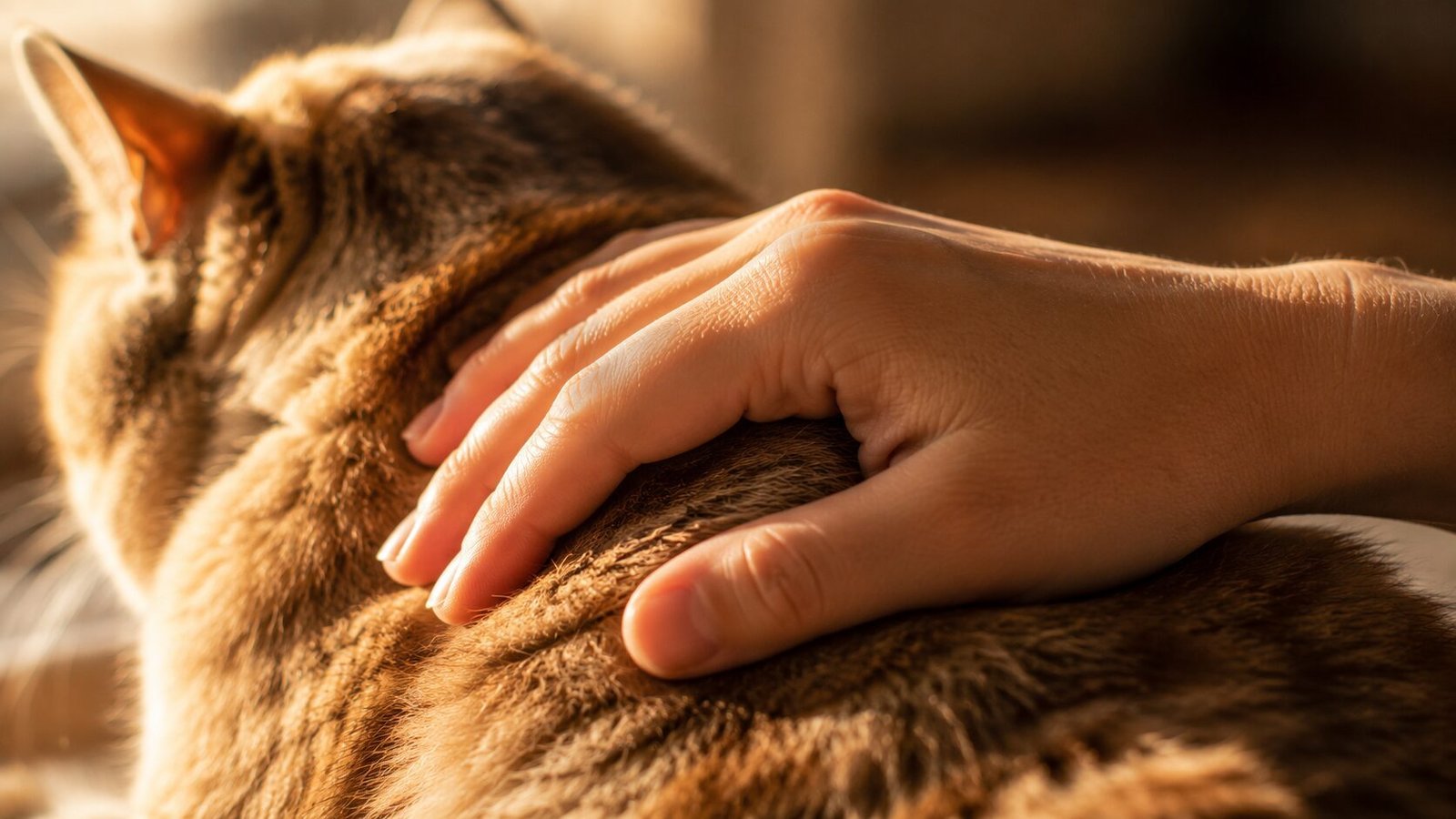
There is a name for what happens when you love something you know you are losing. Psychologists call it anticipatory grief, and it is as real as the grief that follows.
It is not catastrophising. It is not being dramatic, or morbid, or borrowing trouble. It is a natural, recognised response to loving something in the presence of its mortality — which, with a senior pet, is something you are simply aware of in a way you could not have been when they were young.
Anticipatory grief does not announce itself neatly. It arrives as a particular tenderness in ordinary moments. The way you stop what you are doing to watch them sleep. The way a vet appointment leaves you slightly undone even when the news is fine. The way you calculate, sometimes, without meaning to — average lifespan, their age, the shape of the window that might remain.
Many people who lose a senior pet have already been grieving quietly for months, or longer. The loss, when it comes, is not the beginning of the grief. It is the moment it becomes undeniable.
This matters, because it changes the landscape of what you feel afterward.
“I Had Time to Prepare. So Why Does It Feel Like This?”
This is the question that catches almost everyone who loses a senior pet.
You knew. You had months, maybe years, of quiet knowing. You said your goodbyes in advance, in small ways, across hundreds of ordinary evenings. You thought — on some level, you assumed — that the preparation would soften it. That when the moment came, you would be more ready than other people are. That the grief would arrive already partially processed, like a parcel that was signed for in advance.
It does not work this way. Knowing a loss is coming does not reduce its weight when it arrives. What you can prepare is practical: the vet contacts, the arrangements, the decisions you don’t want to make in the sharpest moment of grief. What you cannot prepare is the absence. The specific silence of a home without them in it. The morning you reach for them and they are not there. That part does not arrive in advance, no matter how carefully you have tried to brace for it.
You cannot pre-grieve your way out of grief.
The love was real. The loss is proportional to the love. It was always going to be this large, regardless of how much notice you had.
Relief and Devastation, at the Same Time

There is another thing worth naming, because it is common and because almost nobody talks about it: the relief.
When a senior pet has been suffering — when the last weeks or months have been hard, when you have watched them diminish, when the decision to let them go was made out of love for their comfort rather than your own readiness — there is often, alongside the grief, a complicated feeling of relief. That they are no longer in pain. That the uncertainty is over. That the hardest part of the watching and waiting has ended.
And then, almost immediately, the guilt about the relief.
I want to say clearly: the relief is not a betrayal. It is love, expressed as the wish that someone you care about is no longer suffering. It is one of the most generous things you can feel — to be glad for their sake, even when you are devastated for your own.
Both of these things are true at the same time. The relief and the devastation are not in conflict. They are two facets of the same deep love, and you are allowed to hold them both without choosing between them.
Honouring a Long Life: Four Small Things

When you lose a young animal suddenly, the grief is all shock and rupture. When you lose a senior pet, there is something different available: the long record of a life lived together. The years. The seasons. The selves you were in different apartments, different cities, different chapters — and they were there for all of them.
Here are four small ways to honour that particular span.
Make a timeline of their life with you. Not elaborate — just a list. The year you got them, where you were living, what was happening. The years since, marked by moves or milestones. You may surprise yourself by how much ground you covered together, how many versions of yourself they knew.
Write down one memory for every year they were with you. Fifteen years means fifteen memories. Some will be significant — the first night you brought them home, the time they were ill and recovered. Others will be small: the specific way they sat on the windowsill in a particular flat, the thing they did every morning that drove you gently mad. Write them all. The small ones especially.
Keep one object from their final season in a meaningful place. Not everything — one thing. The blanket they slept on in their last months. The toy they still batted at occasionally even when they were slow. The collar. Something that carries the weight of that particular time, held somewhere you can see it, in a place that says: this season was real, and it mattered.
Tell someone who never met them what they were like. Not to seek sympathy, not to explain the grief, but simply to say the words out loud: they were like this. They did this particular thing. They were, in this specific way, exactly right. The telling keeps them real in the world a little longer.
Loving Something All the Way to the End
There is a particular kind of love that only comes with staying.
Not the early love — the bright, uncomplicated love of a young animal, all energy and novelty and delight. The later love. The love that learns their medications and adjusts the food and lifts them gently and sits with them through the hard nights and makes, when the time comes, the decision that costs you everything.
That love is harder and quieter and more profound than it is possible to fully explain to someone who has not lived it. Grieving a senior pet is not a smaller grief because you had warning. It is grief shaped by years of loving someone slowly and completely.
If you loved a senior animal all the way to the end — if you stayed through the slow parts, through the uncertainty, through the grief that began before the loss and continued after it — you did something rare and significant. You gave them the thing that every living creature deserves: to be loved completely, including the parts that are hard.
The wave that hit you was the measure of that. It was not more than you could handle because you were unprepared. It was that size because the love was that size.
And that, in the end, is everything. If you are in the days that follow right now, our guide to the first week of grief may be a gentle companion for wherever you are.
— Michelle, Evan, Coffee & Cookie
Coffee & Cookie Design · Calgary, Alberta · coffeencookiedesign.com